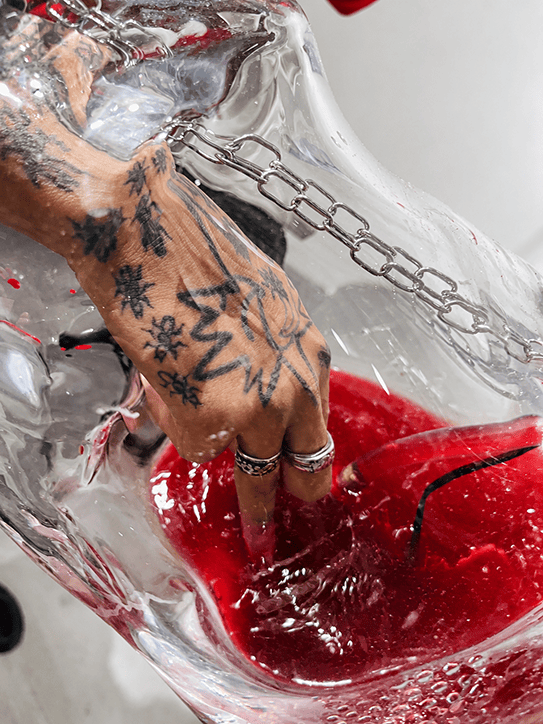
Microbial DNA signatures detected on a farmer’s hands at planting were found six months later in Margherita’s stool, after she ate fruit grown at the same farm. Cultivation and digestion brought two bodies into an unexpected intimacy.
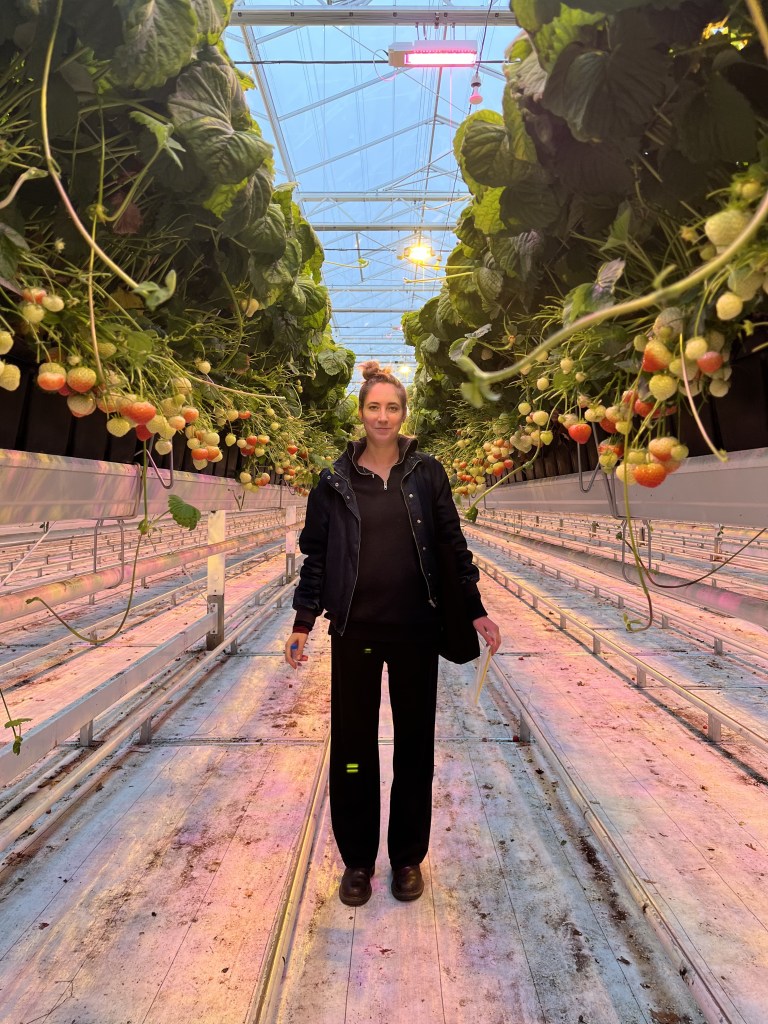
Microbial Commons began with Margherita’s experience of allergies to fruits and vegetables, and her wish to understand more closely how food is produced. Over a year, she followed strawberry cultivation in a regenerative farm and an industrial greenhouse, taking part at each stage, from planting and growing to harvesting, eating and digestion. The research involved spending time with the people working in both systems and learning about their labour, decisions and growing practices. Alongside these encounters, she investigated microbial life: its role in cultivation, its presence and absence, and its relationship with her own body.
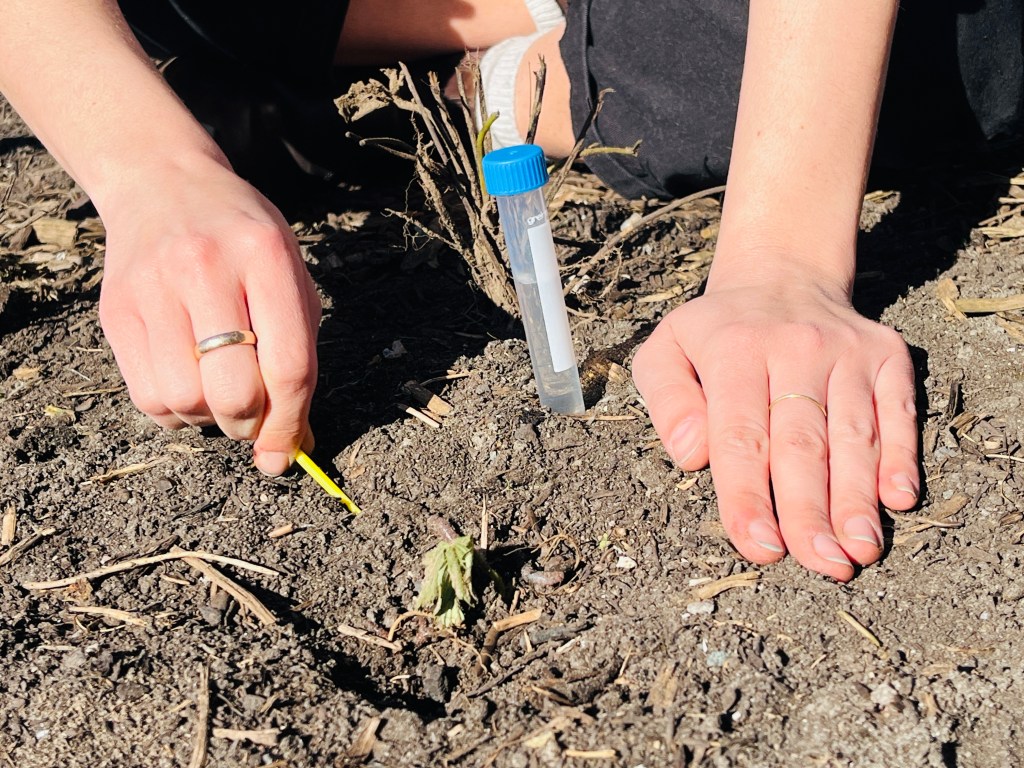
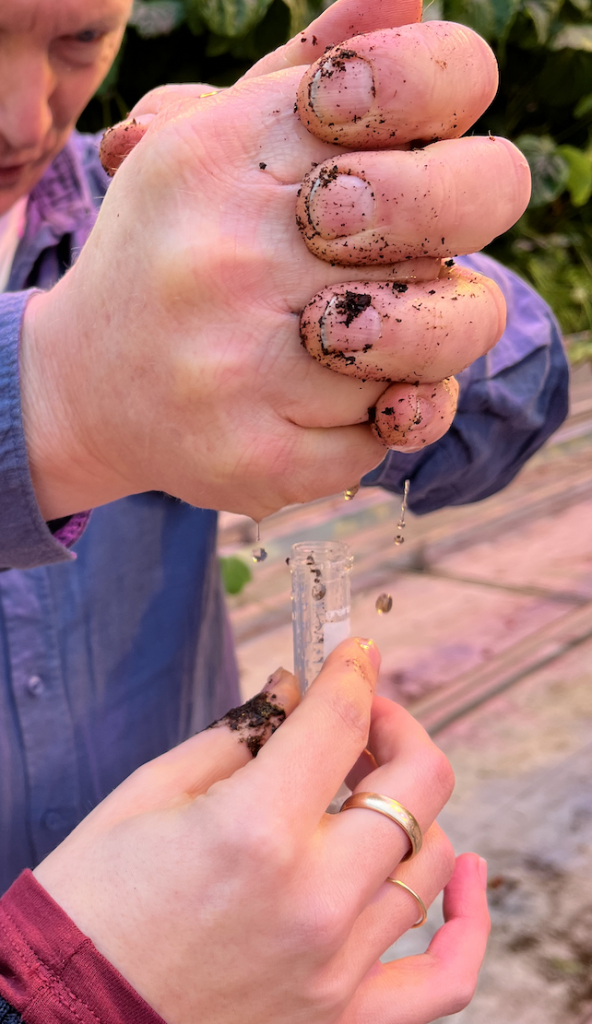
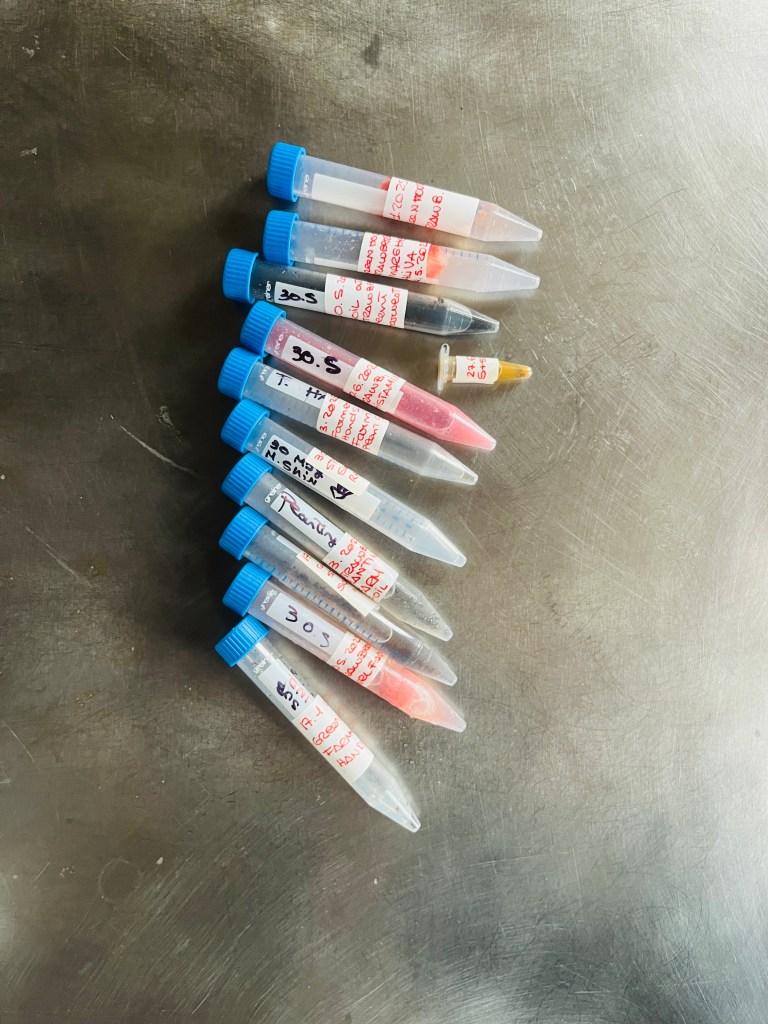
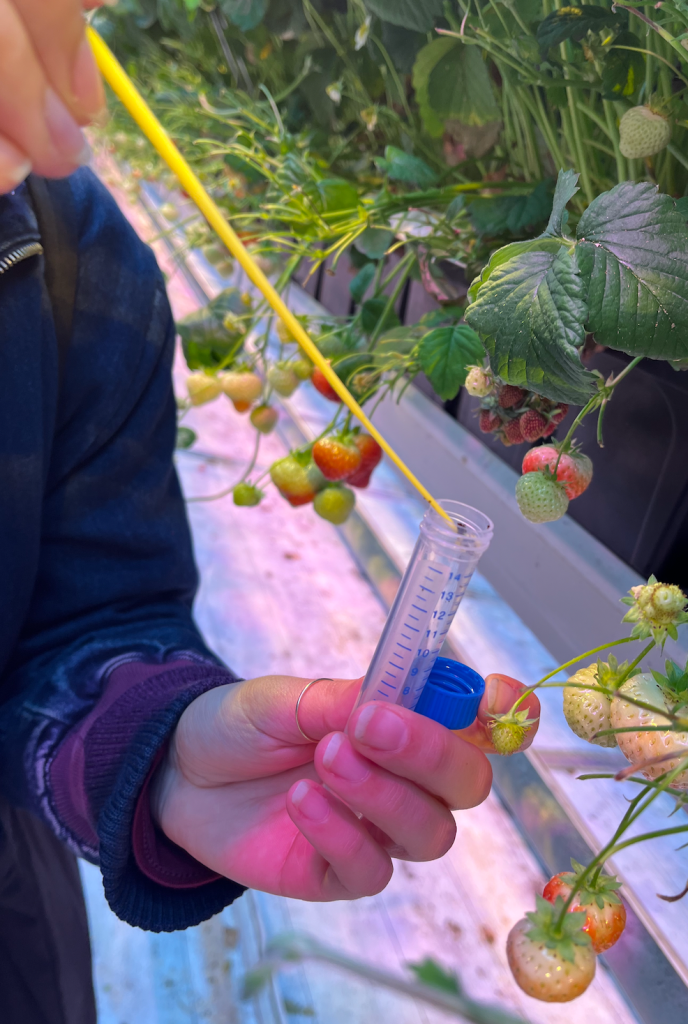
With evolutionary ecologist Justin Stewart, Margherita explored how microbial diversity is identified and recorded, collecting samples across soil, plants, fruit, farmers’ hands and her own body. With artist and haptonomic practitioner Rosalie Bak, she developed exercises in touch and bodily attention as another way of engaging with these environments. Through these different ways of being present, Margherita’s body became both a participant in the research and a record of its encounters. Touch, ingestion and allergic reactions registered contact with each environment. Penetration worked in both directions: she entered and disturbed soil, plants and fruit through sampling, while food and microbial traces entered her body.
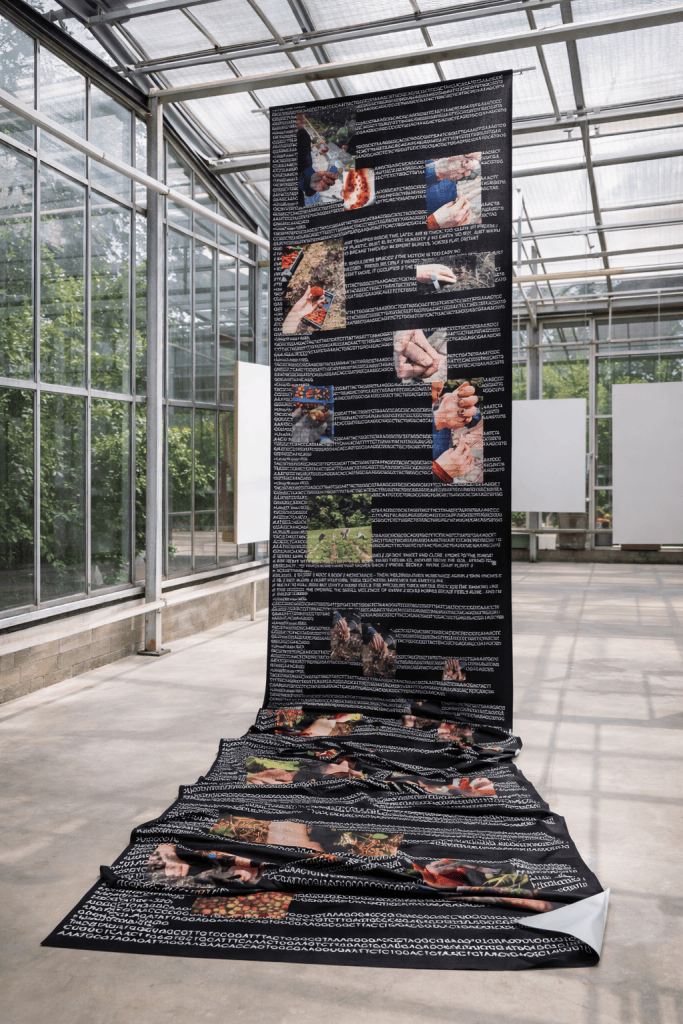
Material: textile
Dimensions: 800 × 140 cm
Collaborators: Justin Stewart, Rosalie Bak and Laura Bolte
Technical support: Anne Lakeman
Photography: Lisanne Lentink
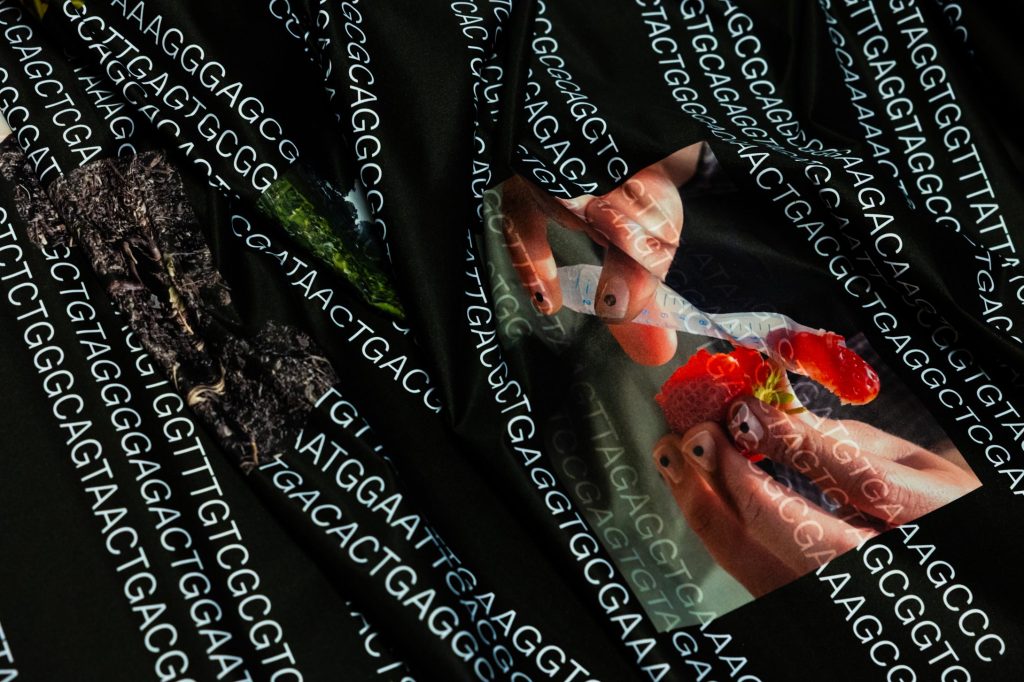
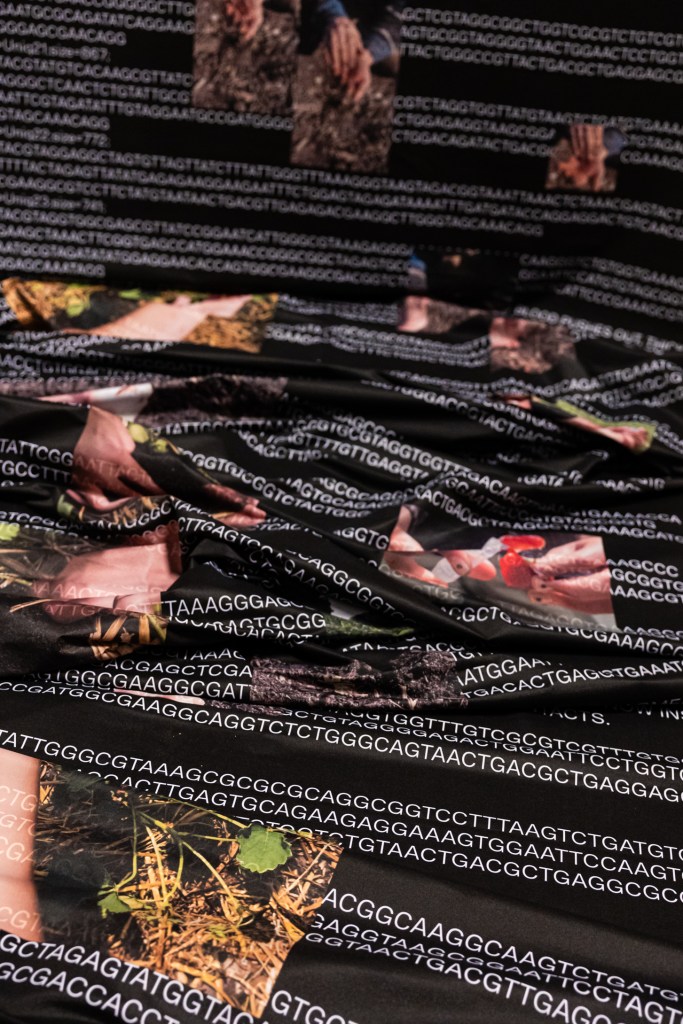
The eight-metre textile print brings together photographs, microbial sequences and records of these encounters.
Special thanks to ’t Gagel for welcoming and supporting the research on the farm, and to EatThis. for guiding the research into strawberry greenhouses through its residency programme.
Exhibited
2026 Soil Memories, De Proef Experiment, Frederiksoord, NL
2025 Hortus ex Machina, Tomatoworld, NL.
Research supported by Stimuleringsfonds Creatieve Industrie.